Translation & localization
Specialist translation shaped for the audience, subject field and destination market.
ExploreOMADA brings linguistic expertise, terminology control and human quality assurance together for multilingual work where every nuance matters.
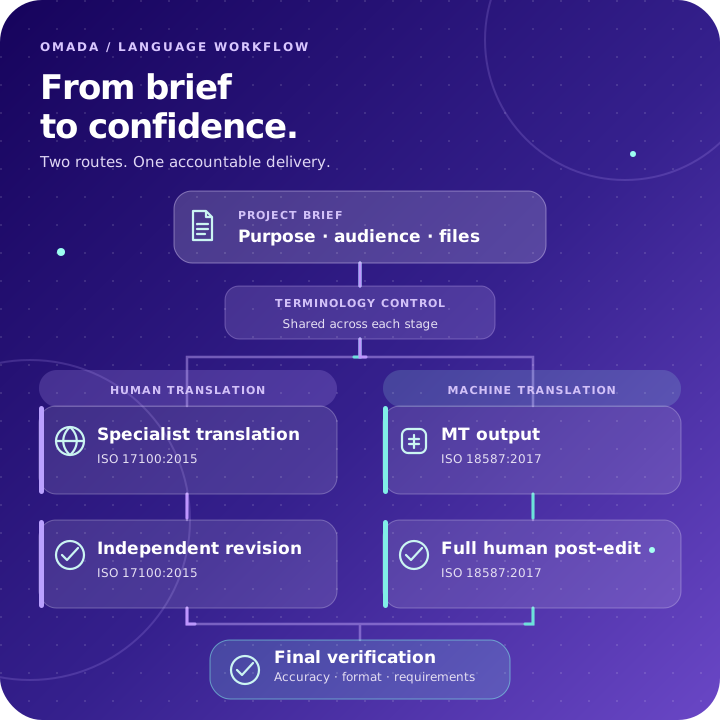

From translation to AI output review, each workflow is shaped by the content and how it will be used.
Specialist translation shaped for the audience, subject field and destination market.
ExploreIndependent review of accuracy, terminology, completeness and natural expression.
ExploreHuman assessment and correction of machine-assisted content according to its risk.
Explore
From intake and terminology to revision, every stage is structured so the final language stands up to real-world use.
Proceedings, contracts, compliance and intellectual property with careful treatment of formal meaning.
Medical, pharmaceutical and device content with controlled terminology and an appropriate review path.
Policy, public-sector and institutional texts with consistent terminology and traceability.
Product documentation, interfaces and technical information for multilingual use.
Reports, tax-related and corporate content with clarity across languages.
Audience-aware language for experiences, websites and brand communication.
Workflow selection, terminology and review are designed in from the start.
Files, audience, language pair, subject and timing are checked.
Specialist linguists, references and technology are matched to the task.
Translation or review follows agreed terminology and instructions.
A human quality pass checks completeness and delivery readiness.
 Greek localization
A practical route from source material to market-ready Greek communication.
Read the article ↗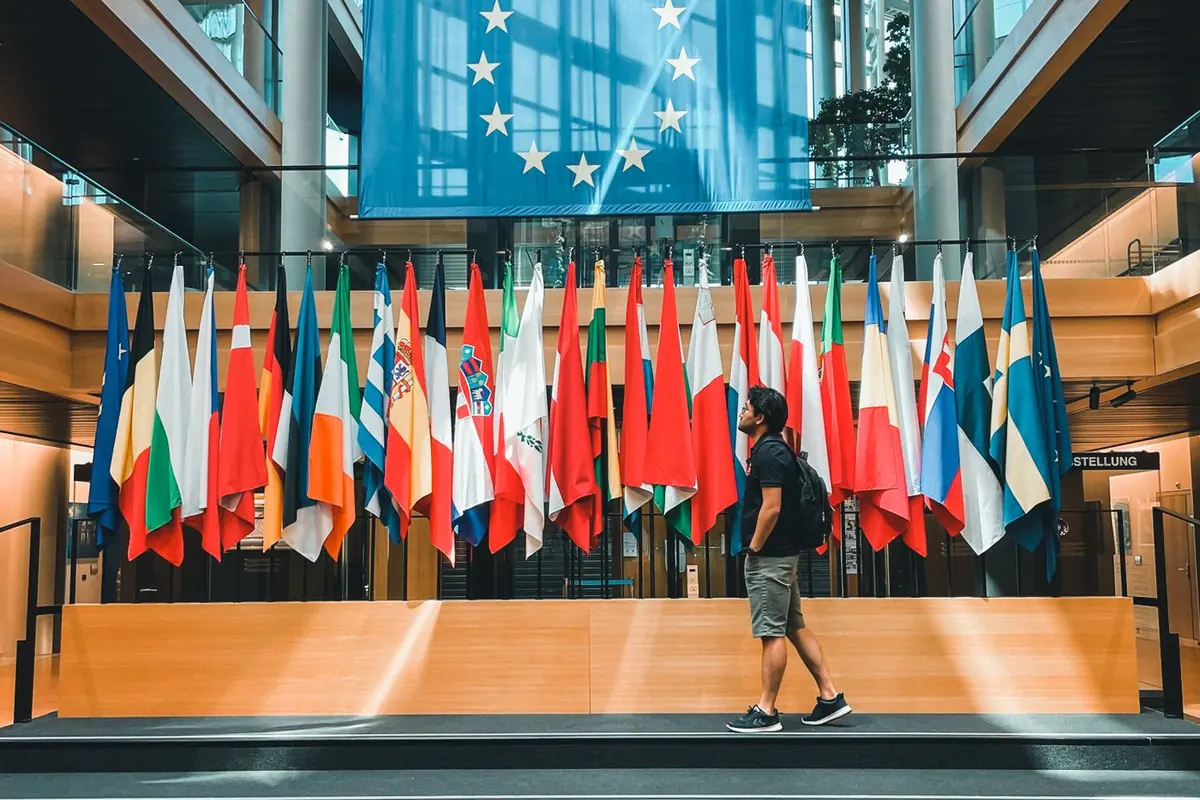 EU & institutional
Why controlled concepts matter to multilingual institutional work.
Read the article ↗ Legal & regulatory
Preserve the source record while helping another jurisdiction read it.
Read the article ↗From EU institutions and public bodies to companies in regulated sectors, OMADA supports clients where accuracy, terminology and reliability matter.Directly or via other translation companies and agencies.
Content carries more than words: legal meaning, technical detail, brand voice and trust. A specialist translator considers the subject, intended audience and real-world use. For sensitive or regulated material, professional review helps prevent ambiguity, inconsistencies and costly misunderstandings.
OMADA brings specialist linguists, terminology management, project coordination and human quality checks into one workflow. We discuss the purpose of each text, select the appropriate expertise and agree on the review steps. You receive a clear scope and a team accountable for the final wording.
A good translation is accurate, natural, consistent and fit for its purpose. It preserves the source meaning while using terminology and tone appropriate to the reader and field. Revision checks the complete text in context, not just individual sentences.
Machine translation can be useful for speed or as part of a suitable workflow. Its output still needs expert judgment where legal effect, patient information, technical instructions, terminology or brand voice matter. We assess the material first and recommend the level of human translation or review it needs.
Yes. We can assess documents intended for public authorities, courts, universities or other formal recipients and arrange the appropriate translation workflow from or into Greek. Tell us where the translation will be submitted, as certification and acceptance requirements depend on the receiving body and document.
Yes. We can organize repeatable workflows for websites, product information, legal and technical material, marketing content and regular updates. Shared glossaries, translation memories and review instructions help keep wording consistent as content and teams change.
We work with subject-specific linguists for legal, medical, pharmaceutical, financial, technical, institutional, intellectual-property and regulatory content. We review the language pair, subject and intended use before assigning the right team and quality checks.
Quality starts with the brief. We agree on audience, terminology and reference material, then use suitable translators, revision and linguistic checks. Translation memories and QA tools can flag inconsistencies, while people make the final decisions about meaning, nuance and purpose.
Yes. We can review source files, clarify the audience and delivery format, prepare or clean up terminology, identify ambiguous wording and plan the appropriate workflow. Resolving questions early gives the translation team a sounder starting point and reduces rework.
Translation conveys a text’s meaning in another language. Localization adapts it for a specific audience or market, including conventions, references and tone. Revision compares an existing translation with its source and improves accuracy, terminology, style and consistency. A project may need one or more of these steps.